
ADVICE & TIPS
How much does running a counter-current jet cost? Consumption and costs
Unlike pool heating, which runs practically non-stop all season, a counter-current jet is an appliance that only runs while you are actually swimming. That fundamentally changes how to look at its operating costs.
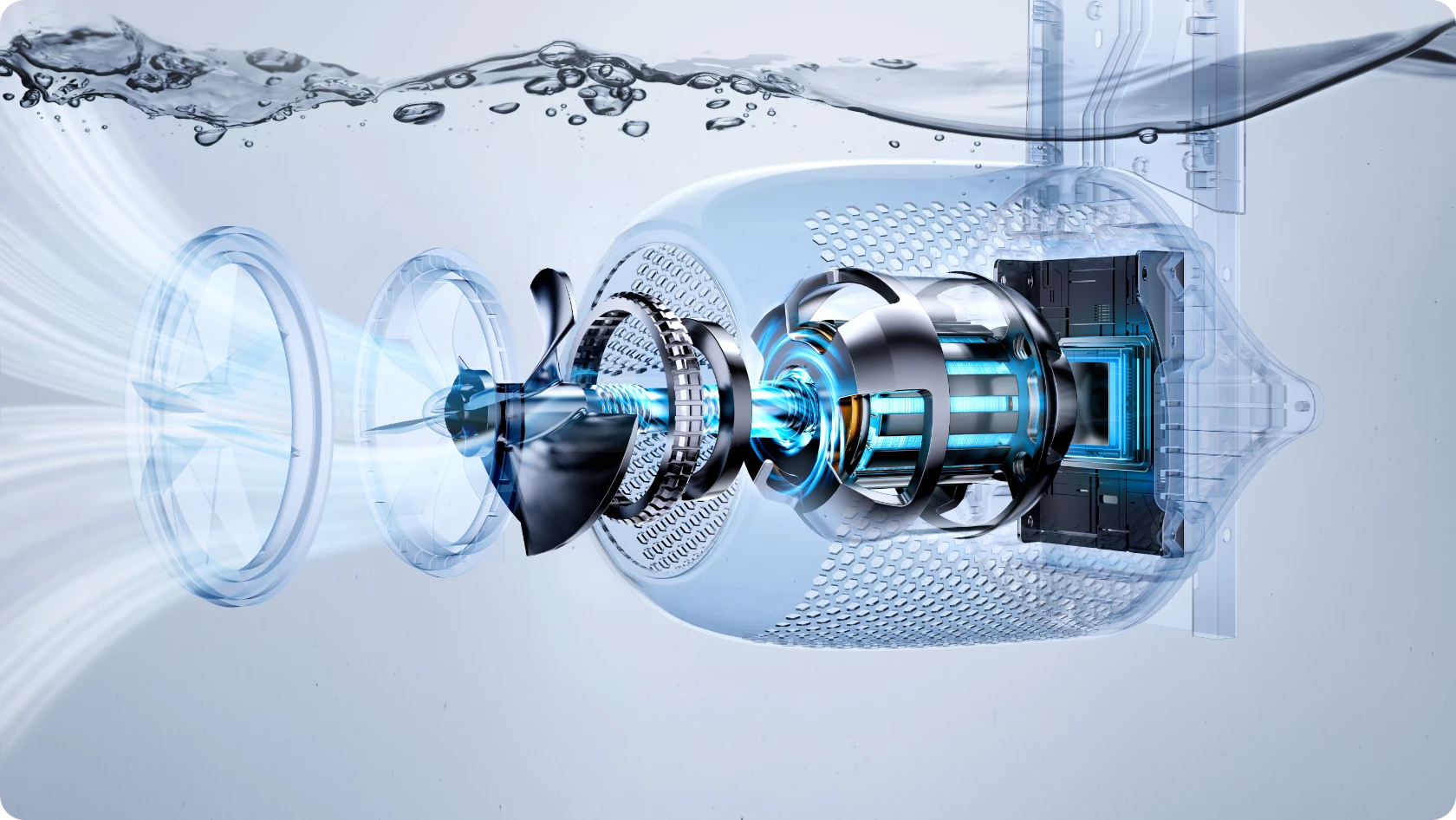
How much the jet actually consumes
The power input of a counter-current jet ranges roughly from 400 W on entry models to about 1,250 W on the most powerful variants — and thanks to smooth power control (instead of fixed on/off), the motor runs only at the percentage of power you set. Half an hour of swimming at medium power thus means consumption comparable to running a common kitchen appliance for the same time — a negligible amount per session, depending on your electricity tariff and chosen intensity.
Why it is significantly cheaper than heating the pool
Heating the pool water by one degree Celsius in a common garden pool consumes on the order of tens of kilowatt-hours — and the heat also escapes continuously, so heating runs practically the whole season. A counter-current jet, by contrast, consumes energy only at the moment it is switched on and actually used. Over a season of ordinary recreational use (say 3–4 times a week for 20–30 minutes), we are therefore talking about operating costs on the order of tens, not hundreds of euros.
What most affects consumption
The three main variables are: the chosen intensity level (lower levels save energy even during longer swims), the total operating time per week, and the power class of the unit — higher models have a higher maximum input, but you normally don’t use them at 100% for the whole swim. Practical tip: for ordinary recreation and playing with children, lower intensity levels are enough even on more powerful models, which keeps consumption low.
The wireless X range: the costs are elsewhere
With the battery-powered JetSwim X range, the electricity cost is practically irrelevant — the unit just charges between uses, which costs a fraction of running the mains variant. The trade-off is a limited operating time per charge (2.5 to 10 hours depending on the model), after which the unit needs to be recharged.
Summary
Running a counter-current jet is a cheap item in a household budget compared to heating the pool — consumption is measured in single kilowatt-hours per training session, not in tens as with water heating. You can find the exact consumption of individual models on the Specifications page.