
ADVICE & TIPS
How to choose a pool counter-current jet: a complete guide
A counter-current jet turns a small garden pool into a place where you can swim on the spot, train or simply relax in the flow of water. Choosing the right model, however, depends on a few specific factors — not on which one has the highest power figure on paper.
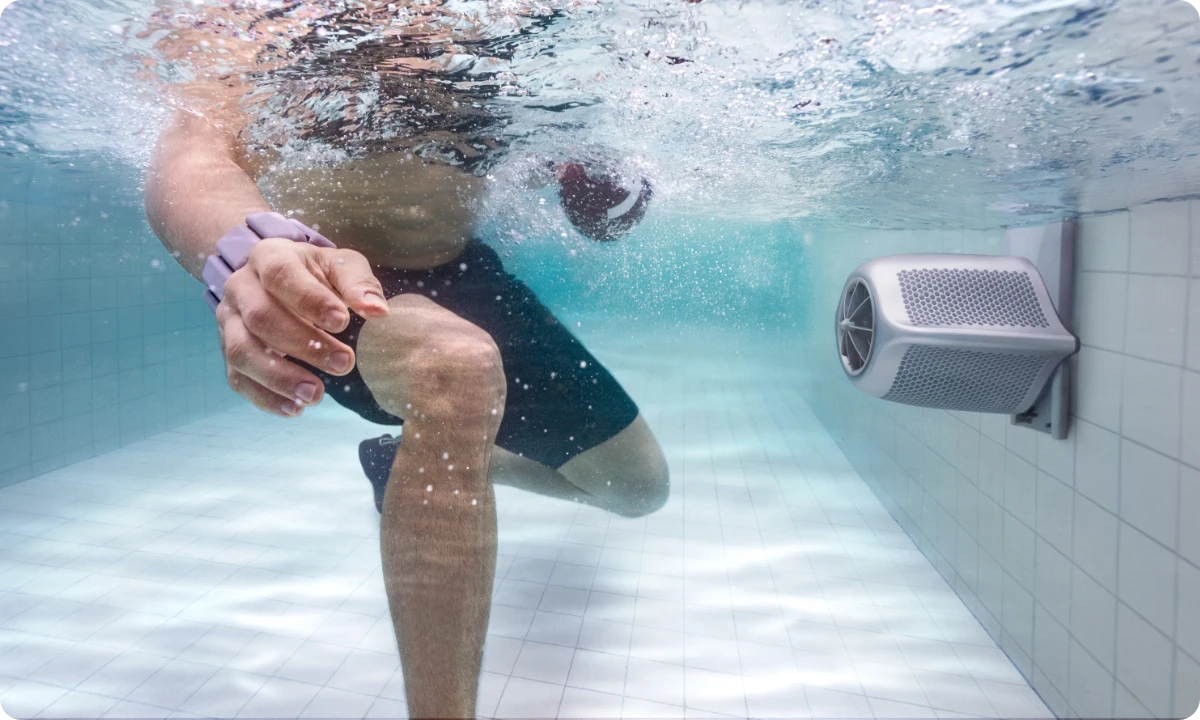
1. Pool size and shape
For smaller pools (up to about 6×3 m) a lower power class is enough — a strong current would be unpleasant rather than useful over short distances. For larger or longer pools, where you want to simulate a real swimming pace, it is better to reach for a more powerful variant with a higher flow speed. A detailed comparison of the power classes can be found on the Specifications page.
2. What you will use the current for
Family recreation and playing with children calls for a gentler, smoothly adjustable current. Regular swimming training, on the other hand, benefits from a higher maximum power and a stable current even during longer continuous use. Rehabilitation swimming will mainly appreciate the ability to finely grade the intensity at the lowest levels.
3. Fixed installation, or a wireless unit?
The standard range is installed by hanging it on the pool edge and is powered from the mains — offering higher and unlimited operating time. The wireless X range simply clamps on without any installation and runs on a battery, which you will appreciate especially where you want to move the unit between pools or simply take it off and store it over winter. The differences between the two ranges are summarized on the JetSwim X page.
4. Operating safety
For units installed directly in the water, a low safe voltage of the motor part (typically 12 V) and adequate water protection are key. The control electronics should stay out of reach of the water. Learn more about the construction and safety features on the Technology page.
5. Installation and maintenance
Most modern units manage without drilling into the pool structure and without interfering with the hydraulics — just hang or clamp them on the edge. This shortens installation to a matter of minutes and lets you remove the unit at any time, for example for winter. The step-by-step procedure is described on the Installation page.
Summary
Smaller pool and recreational use → lower power class. Regular training and a longer pool → higher power. If you want to move the unit or avoid installation → the wireless range. Whichever variant you choose, make sure the motor part runs on a safe low voltage and has adequate water protection.